Bitcoin Value Debate

Elena Rossi
| 04-06-2026
 · News team
Hello Lykkers! Bitcoin has evolved far beyond its original identity as a peer-to-peer digital currency.
Today, one of the most widely discussed roles it plays in global finance is that of a digital store of value. But what does that actually mean—and why do investors compare it to assets like gold?
To understand this, we need to look at scarcity, trust, volatility, and long-term investor behavior.
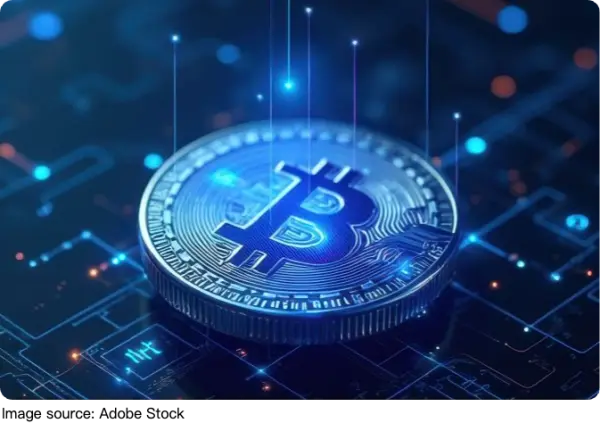
What "Store of Value" Really Means
A store of value is any asset that preserves purchasing power over time. Traditionally, assets like gold, real estate, and certain stable currencies have fulfilled this role because they are:
- Limited in supply
- Widely trusted
- Relatively stable over long periods
Bitcoin is considered in this category because it is designed with a fixed supply and predictable issuance schedule.
The Role of Scarcity in Bitcoin’s Value
One of Bitcoin’s strongest financial features is its fixed cap of 21 million coins. Unlike fiat currencies, which can be expanded by central authorities, Bitcoin’s supply is locked into its protocol.
This creates digital scarcity, meaning:
- No inflation through uncontrolled supply creation
- Predictable issuance through halving events
- Increasing difficulty in mining new coins over time
Economists often argue that scarcity is a fundamental driver of value, and Bitcoin’s design is built around this principle.
Expert Perspective on Bitcoin’s Store of Value Debate
Economist Nouriel Roubini is a well-known macroeconomic scholar and professor at New York University, recognized for his research on global financial stability and market cycles. He is also widely known for his critical stance on cryptocurrencies and their long-term economic role.
Nouriel Roubini states that Bitcoin is neither a reliable currency nor a stable store of value because it lacks intrinsic value and faces immense price volatility. This ongoing debate highlights the divide between traditional financial thinking and emerging digital asset models.
Bitcoin vs Traditional Store-of-Value Assets
Bitcoin is frequently compared with gold because both rely on scarcity rather than government backing.
However, key differences remain:
- Gold has physical industrial and historical use, while Bitcoin is entirely digital
- Bitcoin transfers globally within minutes, while gold is slower and costlier to move
- Gold has thousands of years of monetary history, while Bitcoin is still relatively new
Despite this, many investors now view Bitcoin as a “digital gold” alternative in diversified portfolios.
Volatility: The Key Challenge
Bitcoin’s biggest obstacle to being fully accepted as a store of value is its price volatility.
Its value can change rapidly due to:
- Speculative trading activity
- Regulatory developments
- Liquidity shifts in global markets
- Macroeconomic uncertainty
Because of this, critics argue that Bitcoin is still transitioning rather than fully established as a stable store of value.
Institutional Adoption and Market Perception
In recent years, institutional investors such as hedge funds, asset managers, and public companies have entered the Bitcoin market.
This has led to:
- Increased liquidity and trading volume
- Greater market legitimacy
- Broader integration into financial portfolios
However, this also means Bitcoin is now more sensitive to global economic cycles, just like traditional risk assets.
Digital Scarcity in a Modern Economy
Bitcoin introduces the concept of programmable scarcity—something unique in financial history.
Its core characteristics include:
- Transparent and fixed supply rules
- Decentralized network validation
- No central authority controlling issuance
These features make Bitcoin attractive to investors seeking protection against currency devaluation in uncertain monetary environments.
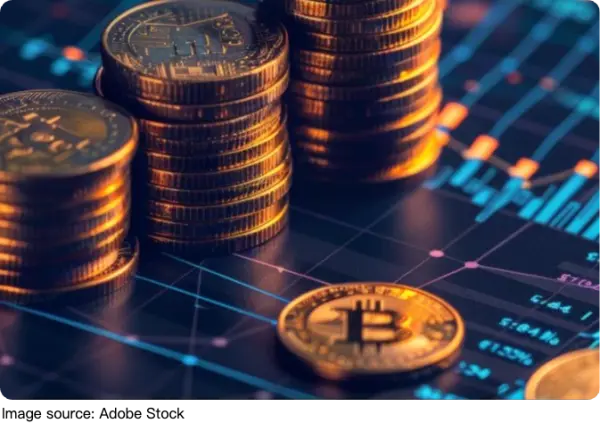
Bitcoin’s role as a digital store of value is still evolving, shaped by both technological design and market perception.
While supporters highlight its scarcity and independence from traditional monetary systems, critics like Nouriel Roubini emphasize its volatility and lack of intrinsic value.
For Lykkers, the key takeaway is clear: Bitcoin represents a new financial experiment—one that is redefining how the world thinks about value, scarcity, and long-term wealth preservation in the digital age.