Future of Globalization

Raghu Yadav
| 15-04-2026
 · News team
Hello Lykkers! Globalization isn't fading — it's transforming. We are stepping into a new phase where the rules of global trade, finance, and economic cooperation are being reshaped by rapid technological advances, shifting global dynamics, and the redistribution of economic power.
This next era of globalization looks very different from the one that defined the late 20th and early 21st centuries.
From Hyper-Globalization to Strategic Globalization
For decades, globalization was driven by efficiency. Companies built supply chains across continents to minimize costs, often relying heavily on a few key regions. This phase, sometimes called hyper-globalization, prioritized scale and speed.
Today, the focus is shifting toward resilience and stability. Businesses and governments are rethinking global dependencies, especially after disruptions such as financial crises, pandemics, and rising global tensions. Instead of relying on a single, far-reaching network, firms are diversifying supply chains and moving parts of their production closer to home — a strategy commonly known as nearshoring or friend-shoring.
Technology: The New Backbone of Global Integration
If the old globalization was powered by shipping containers and trade agreements, the new one is increasingly driven by digital connectivity.
Data, not just goods, is now crossing borders at an unprecedented scale. Cloud computing, artificial intelligence, and digital platforms allow companies to operate globally without a physical presence. Services such as finance, consulting, and healthcare are becoming more international through digital channels.
This shift is creating a more inclusive form of globalization, where smaller firms and even individuals can participate in global markets. However, it also raises new challenges around data regulation, cybersecurity, and digital sovereignty.
The Rise of Multipolar Economic Power
Another defining feature of the next era is the emergence of a multipolar world economy. Economic power is no longer concentrated in a few regions.
Emerging economies are playing a larger role in global growth, trade, and investment. This shift is changing how global institutions operate and how capital flows across borders. Investors are increasingly looking beyond traditional markets to capture growth opportunities in regions with expanding middle classes and rapid urbanization.
At the same time, this redistribution of power can create tension, as countries compete for influence in trade, technology, and finance.
Rethinking Global Supply Chains
Global supply chains are becoming more complex and strategic. Instead of optimizing purely for cost, companies are now balancing efficiency, resilience, and sustainability.
Key priorities include diversifying suppliers across multiple regions, investing in automation to reduce reliance on low-cost labor, and incorporating environmental and social considerations into sourcing decisions. These changes may increase short-term costs, but they aim to reduce long-term risks and improve stability.
Expert Insight
Kristalina Georgieva, Managing Director of the International Monetary Fund, said that globalization is not reversing but transforming, and that while fragmentation risks exist, global cooperation remains essential for addressing shared challenges such as climate change, financial stability, and economic inequality.
Finance in a Fragmented Yet Connected World
The financial system is also adapting to this new reality. Cross-border capital flows remain strong, but they are increasingly shaped by global tensions and differences in regulatory frameworks.
Central banks, sovereign wealth funds, and institutional investors are navigating an increasingly complex landscape where global risks carry as much weight as economic fundamentals. At the same time, innovations like digital currencies and fintech are making international transactions faster and more accessible.
This creates a striking paradox: while global relationships are becoming more fragmented, financial and digital connections are growing stronger than ever.
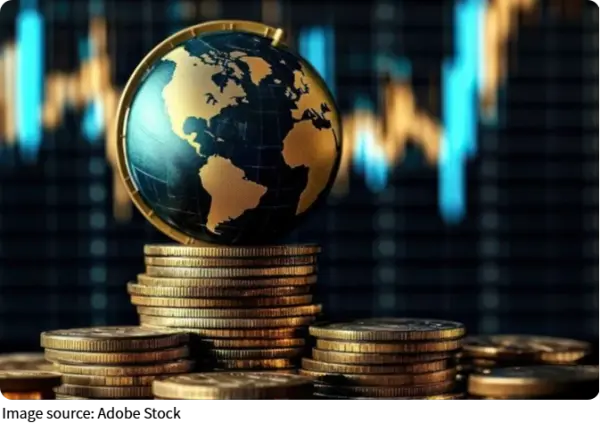
The next era of globalization is not about retreat — it is about recalibration. It blends global integration with local resilience, digital innovation with regulatory oversight, and economic opportunity with growing global complexity.
For Lykkers, the key takeaway is this: globalization is evolving into a more nuanced system. Understanding its new dynamics is essential for navigating the future of finance, investment, and economic growth in an increasingly interconnected world.