Why Slow Growth Works

Owen Murphy
| 23-03-2026
 · News team
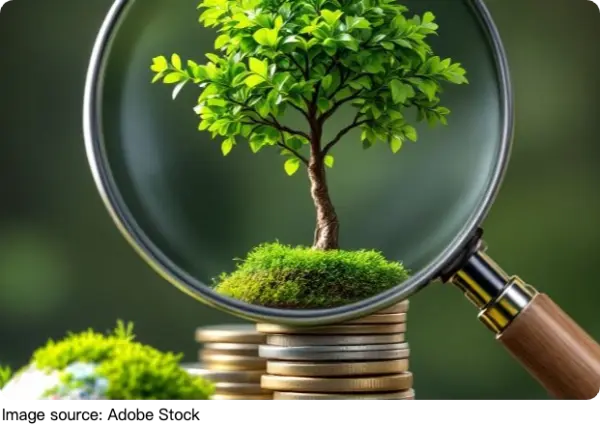
In modern finance, speed is often celebrated, but lasting systems are usually built with more care. Nature offers a useful comparison. Trees do not develop all at once, and forests do not become strong in a single season. They grow steadily, with balance and resilience.
That same principle is shaping an important idea in modern economics: slow growth in sustainable finance. Slowing down may seem counterintuitive in a world that rewards rapid gains, but it can be one of the smartest paths forward for financial systems.
Slow growth does not mean no growth. It means steady, responsible, long-term expansion instead of aggressive surges that are difficult to sustain. In finance, this approach values long-term strength over short-term profit, stability over volatility, and real economic progress over speculative bubbles. A tree that grows too fast may become fragile, while one that develops over time builds deeper roots and stronger branches. Sustainable finance follows the same logic by favoring resilience over speed.
History shows that rapid financial expansion often carries hidden risks. When markets rise too quickly, asset prices can become overstretched, environmental and social risks may be ignored, inequality can deepen, and unstable bubbles can form. Eventually, these pressures lead to painful corrections. Slow-growth thinking aims to reduce those cycles by focusing on durability rather than acceleration. It encourages financial systems to grow at a pace they can support over time.
Herman Daly, ecological economist, said that the economy should be understood as part of the finite ecosphere, not separate from it. This idea helps explain why sustainable finance values balance. Instead of treating endless expansion as the only measure of success, slow-growth thinking supports development that respects natural limits, resource constraints, and long-term resilience. That perspective makes sustainable finance less about chasing momentum and more about building lasting value.
In practice, sustainable investing increasingly reflects this mindset. Investors often look beyond quick gains and pay more attention to ESG investing, green bonds, climate-focused funds, long-horizon infrastructure projects, and responsible corporate governance. These approaches favor companies and projects that grow responsibly, even if they do not produce explosive short-term returns. The logic is simple: a stable return sustained over time is often more valuable than a fast return built on fragile conditions.
There is also a psychological reason this approach matters. Investors are often drawn to fast-moving opportunities because quick rewards feel exciting. Yet that excitement can encourage emotional decisions and unnecessary risk-taking. Slow-growth thinking promotes patience and discipline. It shifts attention away from constant reaction and toward deeper understanding. In that sense, it replaces urgency with judgment.
Nature remains a strong model for this idea. Forests evolve over decades, and ecosystems develop their strength gradually. In finance, that translates into building resilient portfolios, allowing compounding to work over time, and avoiding avoidable risk exposure. Balanced systems are more likely to last, whether they are ecological or financial.
Policy also matters. Governments and institutions can support slower, healthier growth by encouraging renewable energy, sustainable infrastructure, and ethical finance. When decision-makers focus on decades rather than quarters, financial systems are more likely to become resilient and less vulnerable to shocks.
Why does sustainable finance benefit from slow-growth thinking? Because speed without stability can weaken a system, while steady growth builds strength. Slow growth does not mean falling behind. It means creating something durable, balanced, and capable of lasting. In the end, sustainable finance is not a race. It is a long-term process of growing wisely, one steady step at a time.