Boost Score Fast

Chris Isidore
| 21-01-2026
 · News team
It’s getting tougher to borrow. Banks and card issuers are scrutinizing applications, lifting minimum score cutoffs, trimming limits, and verifying income more aggressively.
In this environment, a healthy credit score isn’t just nice to have—it’s the edge that secures approvals and better pricing when money is harder to access.
Why now
When lenders get cautious, they ration credit to the lowest-risk customers. That shows up as more denials, higher required scores, tighter income documentation, and steeper pricing for anyone on the margin. Applicants with variable earnings—contractors and small business owners—often face extra questions and slower decisions.
What tightens
“Stricter standards” play out in several ways: fewer instant approvals, more requests for pay stubs and tax filings, reduced credit limits for new accounts, and smaller auto or personal loan amounts than requested. Some lenders also shorten balance-transfer teaser periods and add annual fees where none existed.
Score tiers
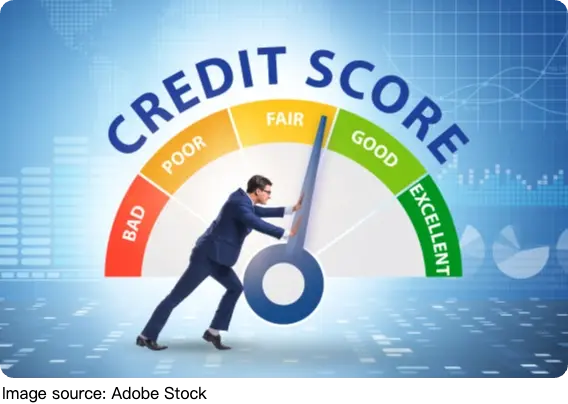
Most lenders anchor decisions to FICO ranges. Scores of 670–739 are typically “good,” 740–799 “very good,” and 800+ “exceptional.” Below 670 is considered elevated risk. In tight markets, approvals skew toward the top of those bands, and pricing gaps widen between neighboring tiers.
Price gap
Rates diverge sharply by score. A borrower in the low-600s can face a used-auto APR that’s several percentage points higher than a borrower above 720. On a $29,000 five-year loan, that spread can add $90 or more to the monthly payment and roughly $5,000–$6,000 in extra interest over the term.
Fast wins
Protect payment history. One late mark can shave dozens of points. Set autopay for at least the minimum on every account and calendar due dates. If funds are tight, prioritize accounts that report monthly (credit cards, loans) to avoid new delinquencies.
Tame utilization
Keep revolving balances low relative to your limits—ideally under 30%, and under 10% if you’re aiming for top-tier scores. If you want a lower balance to be reported, paying down your card before the statement closes can help because it reduces the amount that’s likely to show up on your report. But don’t treat timing as a trick: what matters is the balance that gets reported, not a specific payment schedule. Credit expert John Ulzheimer said that there’s no special benefit to making payments on particular days before the statement date—your score responds to the reported balance and your overall utilization.
Clean errors
Pull all the bureau reports and scan for wrong limits, duplicate accounts, misapplied late fees, or unfamiliar collections. Dispute inaccuracies with documentation. A single corrected error can restore points quickly and prevent a borderline application from tipping into a denial.
Build depth
Thin files struggle under tighter standards. Consider adding a low-fee, no-annual-fee card, becoming an authorized user on a well-managed family card, or using a credit-builder loan. Keep older accounts open to preserve average age, as closing long-standing cards can nick your score and reduce available credit.
Lower risk
Pay down high-interest cards first to free capacity and cut utilization. Avoid new hard inquiries 60–90 days before major applications. If shopping rates, cluster inquiries for autos or mortgages within a short window so they count as a single event under most scoring models.
Document well
Expect more verification. Gather two years of annual earnings statements or tax filings, recent pay stubs, bank statements, and proof of side-income deposits. Gig workers should prepare year-to-date profit-and-loss summaries and consistent bank records. Consistent addresses and names across applications and reports reduce manual reviews.
Choose channels
Credit unions and community banks often underwrite with nuance and can be friendlier to non-traditional income. For cards, prequalification tools (soft pull) help gauge likely approval before risking a hard inquiry. Compare not just APRs but fees, introductory terms, and how limits align with your utilization goals.
Guard flexibility
In looser times, refinancing or long 0% balance transfers could bridge a rough patch. With those options scarcer, preserve room on existing lines and avoid maxing any single card. If you do need relief, ask current lenders about hardship programs before missing a payment.
Mind your mix
A balanced profile—some installment credit (student, auto, mortgage) plus responsible revolving use—tends to score better. Avoid opening multiple accounts at once just for “mix,” but recognize that a single well-managed installment loan can stabilize a card-heavy file.
Stay consistent
Small habits compound: pay on time, keep balances modest, review reports quarterly, and avoid unnecessary hard pulls. If you’re near a tier boundary (e.g., 738 versus 740), even a tiny utilization drop can lower your rate or boost an approval amount.
Conclusion
When lenders get selective, a strong score becomes a powerful filter for better terms and faster yeses. Tighten the basics—on-time payments, low utilization, clean reports—and prepare thorough documentation before you apply. Choose one high-impact action this week—like lowering utilization or fixing an error—to strengthen your next application.